






Māori business The Māori economy
The Māori economy plays a crucial role in driving New Zealand’s economic success and is experiencing significant growth – this is projected to continue. Over the last ten years, the Māori asset base has also grown at a significantly faster rate than the overall economy, and is now valued at almost $126 billion.1
In 2025, 17.5% of New Zealand’s population was Māori (932,300),2 and significantly younger than the national average, with 53% below the age of 30.3 These statistics are an indicator that the growth trend will continue.
The Māori economy is undergoing significant transformation, driven by a growing population and an asset base, expanding its focus beyond traditional sectors such as agriculture, forestry, and fishing.
Although these industries were the primary economic drivers in 2018, that landscape has now shifted. Today, real estate, property services, and professional services have emerged as leading contributors to the Māori economy and to national GDP, presenting new and diverse investment opportunities for those who are interested in partnering with Māori.
Treaty settlements (see Te Tiriti o Waitangi below) and a rapidly growing Māori asset base continue to provide Māori with capital for opportunities beyond the primary sector, with diversification among post-settlement governance entities (a legal entity established to receive and manage settlement assets on behalf of the claimant group) into the education, tourism, infrastructure, property development, and technology sectors.
$41bn Total Māori asset base,4 made up from Māori collectives (Māori trusts, Māori incorporations and other Māori entities).
We have also observed the emerging collective voice of Māori collectives (Māori trusts, Māori incorporations and other Māori entities that are involved in the collective management of communally owned Māori assets), which are significant contributors to the Māori and national economy. Māori collectives make up $41 billion of the Māori asset base with many having "hundred million plus" balance sheets, strong governance and management, and long-term growth strategies.
Māori collectives are reported to own around 50% of all agriculture, forestry, and fishing assets in the Māori economy:
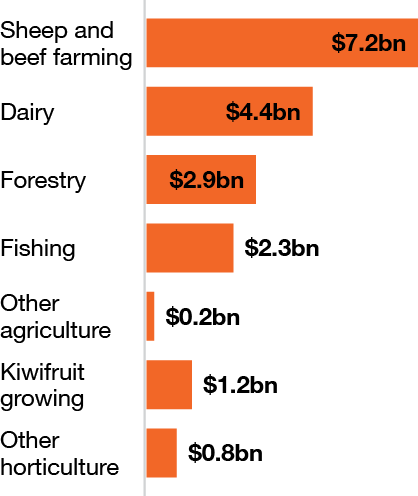
Source: MBIE (2024), Te Ōhanga Māori – The Māori Economy 2023 Report, pg 6
Recent data on Māori businesses indicates that:
- There are 1,362 Māori authorities and 4,488 other Māori enterprises (being other Māori businesses that are economically significant but are not Māori authorities) - 7.5% of which are Māori tourism businesses
- Māori authorities have provided employment opportunities for around 12,500 individuals while other Māori enterprises have contributed around 39,200 employees to the workforce
- Around 21% of Māori authorities operated in agriculture and other primary industries, with the average size of Māori farms being nearly 2.5 times as large as the average New Zealand farm
- Māori authorities exported $872m worth of goods, 24% of which went to China, while other Māori enterprises exported $574m worth of goods
- The total income for Māori authorities was NZ$5.7billion in FY24
Māori business Joint ventures with Māori
Many iwi and Māori organisations are now significant institutional investors and development partners within the New Zealand economy.
Joint ventures between Māori and non-Māori organisations are becoming increasingly common. Māori organisations are seeking partnerships with investors who, in addition to contributing capital, also contribute capability and expertise while recognising the strategic value (including resource access, relationship networks and local understanding of regulatory processes), and the long-term investment timeframes that Māori organisations bring to the relationship.
For some large projects requiring the use of natural resources, we are seeing a number of innovative ownership and commercial models which incorporate:
- Strong alignment of values between partners and the development of covenants or kawenata (undertakings)
- Access to global intellectual property, technology and innovations
- Reciprocal access to channels to market
- Mutual investment into the health of the environment and sustainability of the natural resources
- Recognition of mana whenua and mana moana (local tribal authorities)
- Representation on governing boards and executive management teams
- Investment into skills, workforce, education and scholarship initiatives
Alignment of values and a mutual focus on long-term investment goals often results in a successful joint venture between Māori and non-Māori parties.
Māori business Core values underpinning social and cultural objectives
Most iwi and Māori collectives invest with wider social and cultural objectives in mind and with an overarching intergenerational lens. Common values underpinning these social and cultural objectives include:
- Whanaungatanga: Building and maintaining relationships
- Manaakitanga: Care and hospitality, particularly for visitors, and building unity
- Rangatiratanga: Stewardship of others and empowering Māori to advocate for their own people
- Kaitiakitanga: Guardianship, particularly in respect of natural resources
Māori organisations and collectives will often have future generations in mind and seek long-term relationships where economic success can facilitate greater social outcomes and benefits for their people. It is important to Māori organisations and collectives that commercial investments perform to their maximum potential in order to achieve, and/or directly impact, their wider social and cultural objectives, while continuing to operate under the respective values.
Overseas investors considering partnering with Māori collectives and organisations, or considering an investment that involves land or natural resources, will likely benefit significantly from understanding New Zealand history, an understanding of the presence and influence of te ao Māori (the Māori world and worldview) and the accompanying cultural values that Māori as a people and Māori organisations hold. Engaging with iwi and relevant groups early in the project will likely improve success.

Māori business Te Tiriti o Waitangi (the Treaty of Waitangi)
Te Tiriti o Waitangi / The Treaty of Waitangi (The Treaty) is one of New Zealand’s foundational constitutional documents. Signed in 1840 between representatives of the British Crown and rangatira Māori (chiefs), the Treaty continues to influence New Zealand’s legal, regulatory, and commercial environment.
Over recent decades, the settlement of historical Treaty grievances has contributed to the growth and diversification of the Māori economy. Treaty settlements have enabled many iwi and Māori organisations to establish post-settlement governance entities (PSGE) and grow investment portfolios across sectors including property, infrastructure, tourism, technology and forestry. Significant settlements under which assets were settled to Māori groups for Treaty claims, including the Māori Fisheries Settlement and the Central North Island Forests Settlement, have also contributed to the development of large-scale Māori commercial platforms and investment capability.
The Treaty is recognised in a range of New Zealand legislation and regulatory frameworks, particularly in areas relating to natural resources, local government, and infrastructure development. While the legislative landscape continues to evolve, the Treaty remains an important consideration in many public and commercial decision-making processes.
Investors considering projects involving land, infrastructure, natural resources or significant community engagement may benefit from engaging early with iwi, hapū, and Māori organisations. Strong relationships and alignment of values can support successful long-term outcomes.
Iwi and Māori organisations and collectives play an important role in helping to grow the domestic capital needed to achieve growth in Aotearoa New Zealand’s productive assets. It is important that investors understand the core values and cultural objectives that underpin investment for Māori organisations, and look to engage with Iwi early, in order to partner effectively.
PwC’s Manukura Māori team is passionate about working with iwi, Māori focused entities, and organisations to enhance Māori economic, social, cultural and environmental outcomes and help shape a future Aotearoa where all communities thrive. As a community of solvers, the Manukura Māori Business Team advises investors on successfully engaging and doing business with Māori organisations.
Doing Business in New Zealand 2026
Download the latest edition to Doing Business in New Zealand and gain expert-led insights into investing in Aotearoa New Zealand.
Contact us
About the author(s)
The world never stops moving—and neither do you.
We’re a tech-forward, people-empowered network. With deep expertise and advanced capabilities, we’ll help you harness technology, make smart investments and be ready for any future. Across audit and assurance, tax and legal, deals and consulting we bring together the teams, resources and alliances you need to act boldly and achieve real results. We help you meet the demands of our ever-changing world with consistent quality, commercially-focused and objective advice.
In Aotearoa New Zealand, PwC has offices in the Auckland, Waikato, Hawke's Bay, Wellington and Canterbury regions. Over and above our traditional service offerings, we have a strong industry focus, with integrated teams dedicated to key industry groups in both global and national markets. For our clients, this means the best local knowledge combined with the broadest global experience.

PwC Legal – integrated legal expertise
PwC Legal offers expertise across a broad range of practice areas. We are part of the largest legal services network by geography, with over 3,500 lawyers worldwide. While technical excellence is fundamental to what we do, it is our global reach and deep market insights that set us apart from traditional law firms, allowing us to offer you a fully integrated service that encompasses legal, financial, tax, and accounting expertise.
In today’s fast-moving world, it is more important than ever to have a legal partner who understands all aspects of your business. This document brings together the diversity of expertise and skills across PwC Legal and PwC New Zealand to help you navigate the changing and complex business environment.


